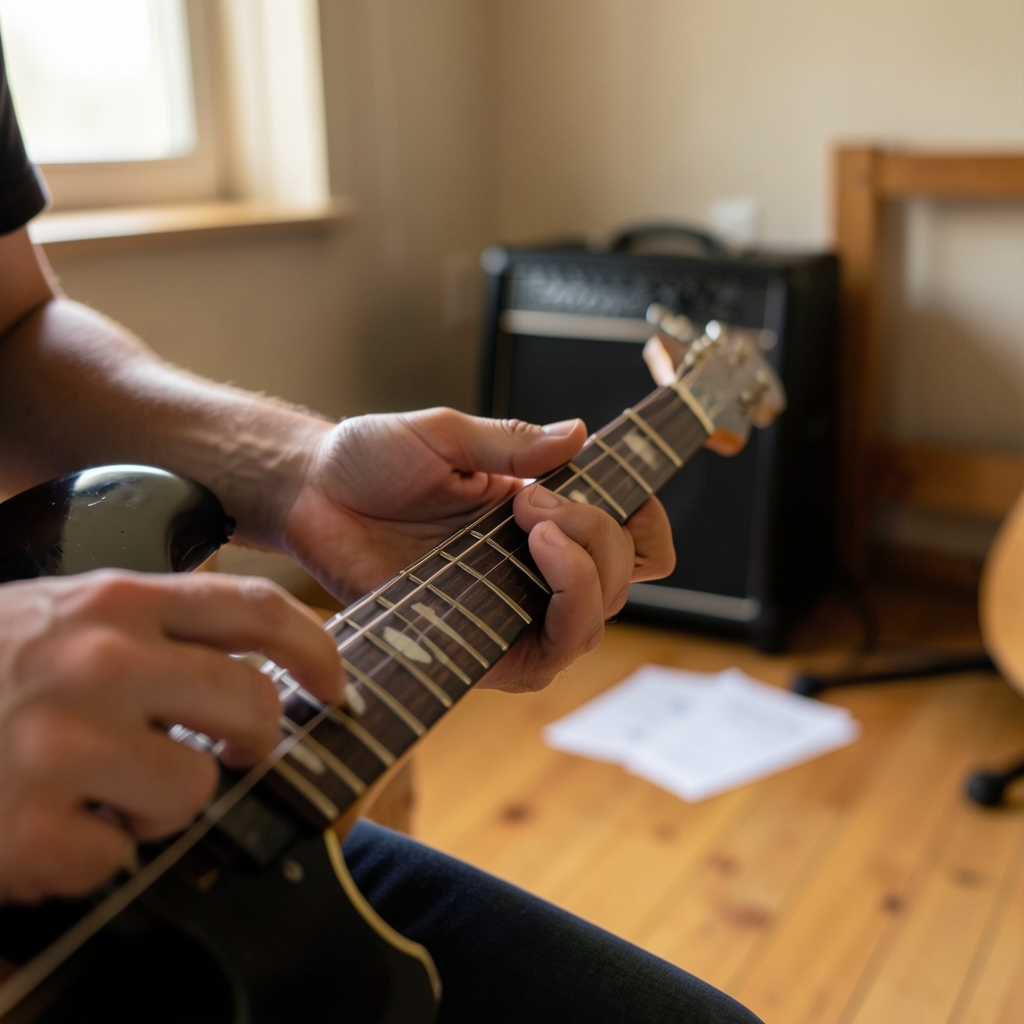
How to Play the Electric Guitar: A Beginner's Plan
As an Amazon Associate we earn from qualifying purchases. This page contains affiliate links.
Learning how to play the electric guitar is less about natural talent than about a few early choices: the instrument you pick, where you practice, and which songs you aim for first. Most beginners stall because they try to learn everything at once. This guide gives you a simpler path.
Our top picks
We may earn from qualifying purchases. Read our affiliate disclosure.
- 1Check price on Amazon
How To Play Electric Guitar: Easy to Read
Complete beginners who want a plain-language start
- 2Check price on Amazon
How to Play the Electric Guitar: A Beginner's Guide to Learning the Electric Guitar
Beginners who want a guided, book-based start
- 3Check price on Amazon
HOW TO PLAY ELECTRIC GUITAR FOR BEGINNERS: Step-by-Step Lessons
Learners who want a lesson-by-lesson routine
How we researched
We compared three top-ranking pages for this question, a Fender beginner guide, a Stack Exchange thread and a Quora question, and three Amazon beginner books listed for this keyword, checking their titles, ratings and price tiers. We did not test any instrument, amplifier or book ourselves. This guide compares products using manufacturer specifications, current Amazon listings and owner reviews; we did not test them hands-on.
Quick answer
To learn how to play the electric guitar, start with a playable guitar and a small amplifier, learn to hold the instrument and fret clean single notes, then move to basic chords and simple songs. Practice in short, regular sessions, use a tuner, and stick with one structured book or course.
What you need
You need a guitar that plays comfortably, a small practice amplifier, an instrument cable, a tuner (clip-on or app), a pick and a metronome or backing-track app. Skill level is beginner, and the first few weeks will feel slow. That is normal. Plan for daily short sessions rather than occasional long ones.
The steps
Step 1: Choose a guitar you can play comfortably
Fender's own beginner guide puts basics first, then choosing the right guitar, which it describes as finding the best guitar for you. Look for an instrument where the strings sit fairly low above the frets, because high strings make it hard to press notes down. A shop setup can help. The usual mistake is buying a cheap guitar that is hard to fret, then blaming yourself for the sore fingers and buzzing.
Step 2: Learn to hold the guitar and the pick
Sit with the body resting on your strumming-side leg, keep your back straight and hold the pick with a relaxed grip. Tension in your picking hand is the most common early problem. If your forearm aches after five minutes, you are squeezing too hard.
Step 3: Fret clean single notes
Press each string with your fingertip just behind the metal fret wire, not in the middle of the space. Pluck one string at a time and listen for buzzing. Use your tuner before you start, because a slightly out-of-tune guitar makes every note sound wrong and hides whether your fingers are doing the job.
Step 4: Learn a few basic chords
Start with two or three open chords and switch between them slowly. Rushing the changes is the usual mistake. Beginners often try barre chords too early, which is frustrating because they need more finger strength and precision than open chords.
Step 5: Play songs with a timing tool
Choose simple songs that use the chords you know, and play along with a metronome or backing track. Learning songs by ear without a steady beat is a common trap, because it trains you to speed up and slow down with the recording rather than keeping time yourself.
Where to start learning
Beginners ask this question constantly. A Stack Exchange thread asking how to start on electric guitar links to an earlier closed thread on the same topic that has four answers, and a Quora question from a self-described beginner asks the same thing. The pattern is clear: most people get stuck on where to begin, not on whether they can learn.
If you want a guided route, the three Amazon books below cover the basics in different ways. Choose one and stick with it for several weeks.
- How To Play Electric Guitar: Easy to Read has 4.6 stars from 356 ratings on Amazon and sits in the under $100 tier. Its title suggests plain-language instruction, which suits complete beginners.
- How to Play the Electric Guitar: A Beginner's Guide to Learning the Electric Guitar has 4.2 stars from 107 ratings on Amazon and sits in the under $100 tier. It suits readers who want a guided, book-based start.
- HOW TO PLAY ELECTRIC GUITAR FOR BEGINNERS: Step-by-Step Lessons has no rating listed and sits in the under $100 tier. Its title points to a lesson-by-lesson format, which suits people who like a fixed routine.
Check the table of contents and sample pages before you buy, so the book matches how you like to learn.
Common mistakes
- Switching books or methods every week. Pick one resource and follow it for a few weeks before judging it.
- Buying gear before you can play. A decent amplifier helps, but you can learn the basics on a modest setup.
- Practicing without a tuner. Out-of-tune strings make clean fretting harder to judge.
- Skipping the timing tool. Steady rhythm matters more than playing fast.
FAQ
Can I learn electric guitar directly?
Yes. Nothing in the sources I reviewed requires learning acoustic guitar first. What you need is a guitar you can play comfortably and an amplifier so you can hear your notes at a useful volume.
Do 90% of people quit guitar?
I could not verify that figure from the sources I checked, so I will not repeat it. Many beginners do stall in the first months, and the usual fix is a clear goal and a practice schedule rather than new gear.
What is the 80/20 rule for guitar?
The sources I checked do not give a single standard definition. People usually mean focusing on the small set of skills, such as clean chords and steady timing, that give you the most musical payoff early on. Treat it as a planning habit, not a fact.
How does an electric guitar work?
Pickups under the strings sense string vibration and turn it into an electrical signal. An amplifier makes that signal loud enough to hear, which is why you need an amp for normal practice.
Next step
Pick one book, schedule short daily practice sessions, and record yourself once a week. Compare the recordings to see whether your chord changes and timing are improving.
Conclusion
Learning how to play the electric guitar comes down to a playable instrument, clean fretting, a few chords, and songs played with a steady beat. Choose one structured resource, practice briefly and often, and you will have a clear sense of progress within weeks.
Sources
Our recommendations
We may earn from qualifying purchases. Read our affiliate disclosure.
- 1Check price on Amazon
How To Play Electric Guitar: Easy to Read
Complete beginners who want a plain-language start
- 2Check price on Amazon
How to Play the Electric Guitar: A Beginner's Guide to Learning the Electric Guitar
Beginners who want a guided, book-based start
- 3Check price on Amazon
HOW TO PLAY ELECTRIC GUITAR FOR BEGINNERS: Step-by-Step Lessons
Learners who want a lesson-by-lesson routine
Related guides
View All
Tuning Electric Guitar: Step-by-Step for Beginners
Learn tuning electric guitar step by step: standard EADGBE, a clip-on tuner routine, common mistakes, and which Amazon tuners suit beginners.
squier by fender bass: best models for beginners
A practical guide to squier by fender bass models: what Fender's entry line offers, which Amazon listings suit beginners, and what to check before you buy.
Best brands of electric guitar for beginners
Compare the main brands of electric guitar, from Fender and Gibson to Epiphone and PRS, with Amazon picks by budget and playing style.
Best Beginner Electric Bass Guitar: Picks by Budget
Compare beginner bass guitars by price tier and size: budget, mid-range and premium picks, what to check before buying, and Amazon-rated listings.