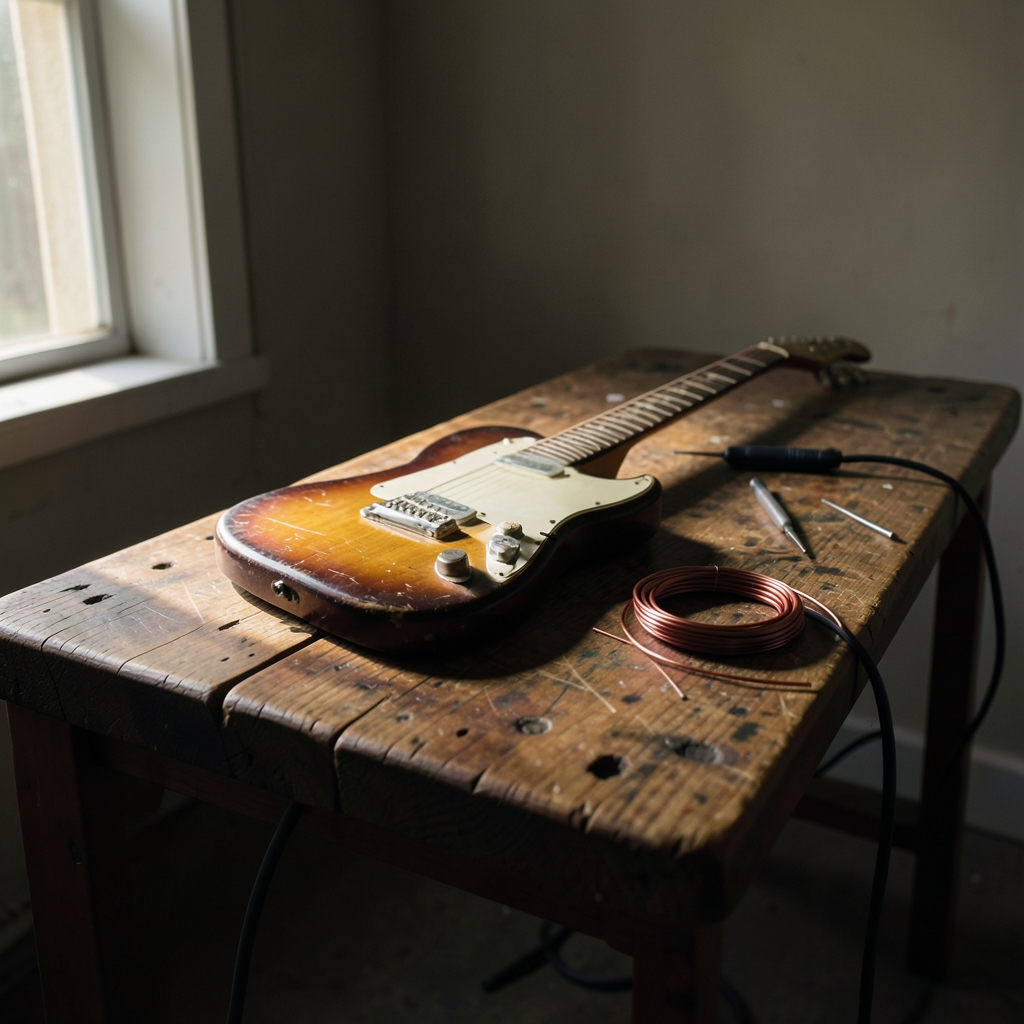
Who invented electric guitar? Pioneers and dates
As an Amazon Associate we earn from qualifying purchases. This page contains affiliate links.
Asking who invented electric guitar gets a different answer depending on what you count as the invention. Most histories point to the early 1930s, when George Beauchamp and Adolph Rickenbacker built electromagnetic pickups and a cast aluminium lap steel guitar. This guide sorts the claims by date, shows where the sources disagree, and points to books you can read next.
Our top picks
We may earn from qualifying purchases. Read our affiliate disclosure.
- 1Check price on Amazon
The Birth of Loud: Leo Fender
Readers who want the Fender side of the electric guitar story
- 2Check price on Amazon
The Electric Guitar: A Graphic History (Amazing Inventions)
Visual readers who want a quick overview of the timeline
- 3Check price on Amazon
The Electric Guitar: A History of an American Icon
History-minded readers interested in the American story
How we researched
We compared six top-ranking pages on this question, using the excerpts available for three of them, and four Amazon book listings on the same topic. The pages include an encyclopedia entry, a museum-linked invention story, a music-education site, a guitar-lesson blog and a music retailer's history article. We also looked at a forum thread but did not use it as a source for dates. Nothing was tested hands-on. This guide compares products using manufacturer specifications, current Amazon listings and owner reviews; we did not test them hands-on.
The short answer
The inventor most often credited is George Beauchamp, working with Adolph Rickenbacker. Wikipedia's electric guitar entry says the instrument was developed in 1932 in the United States, and that Beauchamp and Rickenbacker invented the electromagnetic pickups. A pickup wraps coils around a magnet, so string vibration becomes an electrical signal that an amplifier can boost. That pickup is the core idea, which is why Beauchamp is the strongest single answer for most readers.
Who gets credit for which milestone
1931 to 1932: the Frying Pan
The first electrically amplified stringed instrument sold commercially was a cast aluminium lap steel guitar nicknamed the Frying Pan. Its shape gave it the name, and it was built for players of Hawaiian-style music. TrueFire's history dates its creation to 1931 and notes that Beauchamp was not awarded a patent until 1937, which let other companies make electric guitars in the meantime.
Around 1936: Charlie Christian
Yamaha's Musical Instrument Guide says jazz guitarist Charlie Christian began using an acoustic guitar with a pickup attached around 1936, so he could play guitar solos in his band. Yamaha describes this as the birth of the electric guitar, but it says this is "said to be" the case, so treat it as a popular account rather than a settled date. Christian's role was playing an amplified instrument in a band, not building one.
Around 1940 to 1941: Les Paul and Orba Appleton
The Smithsonian-linked Lemelson Center story says Les Paul, around 1940, mounted strings and pickups on a solid block of pine to cut the body vibrations that caused feedback. Les Paul's "Log" is a practical solid-body experiment, not a commercial product. In 1941, according to Sweetwater's article, Orba Wallace Appleton of Burlington, Iowa, created a single-cutaway, slab-body electric guitar.
1949: the first solid-body on the market
Yamaha states that Leo Fender's Fender Esquire, released in 1949, is now regarded as the first solid-body guitar on the market. Solid bodies solved feedback, which was the main problem for guitars with pickups fitted to hollow bodies.
| Milestone | Credited to | Date given in sources |
|---|---|---|
| Frying Pan lap steel | George Beauchamp, with Rickenbacker | 1931 design, 1932 sales |
| Pickup development | Beauchamp and Adolph Rickenbacker | 1932 development period |
| Log prototype | Les Paul | Around 1940 |
| Single-cutaway slab body | Orba Wallace Appleton | 1941 |
| First solid-body on market | Leo Fender (Esquire) | 1949 |
Where the sources disagree
The biggest split is the date. Some accounts date the Frying Pan to 1931 because that is when it was designed. Others use 1932, when commercial production began. Both are right about different steps, so pick the one that matches your definition.
The second split is what counts as the first electric guitar. Yamaha's version credits Charlie Christian's amplified acoustic around 1936 as the birth of the instrument. Wikipedia's version credits the Frying Pan as the first commercially marketed electrically amplified stringed instrument. The first is about use, the second is about a product.
The third split is a detail about the Les Paul Log. Lemelson describes a solid block of pine, while TrueFire describes a maple block. Neither source gives a reason for the difference, so the wood type is best treated as uncertain.
Common confusions
Many readers assume the first electric guitar had a solid body. It did not. Early electric guitars were hollow-body or semi-acoustic designs, and solid bodies came later to fix feedback. If you are shopping for a modern electric, that history explains why solid bodies became the standard.
Which book to read next
If you want the full story in one place, start with The Birth of Loud: Leo Fender, which is best for readers who want the Fender side of the history. It has 4.8 stars from 1100 ratings on Amazon and sits in the under $100 tier. Readers who want a visual overview may prefer The Electric Guitar: A Graphic History, which has 4 stars from 8 ratings on Amazon and is also under $100. For a deeper look at the instrument's American story, The Electric Guitar: A History of an American Icon is the option for history-focused readers. It has 4.1 stars from 5 ratings on Amazon and is under $100.
Before buying any of these, check the listing for the edition and page count, since the listings we reviewed give ratings and tiers but no further specifications.
FAQ
Who was the first electric guitarist?
There is no single agreed answer. Yamaha credits jazz guitarist Charlie Christian with playing an amplified acoustic around 1936, which it calls the birth of the electric guitar. Wikipedia lists early proponents on record, including Les Paul, Eddie Durham and T-Bone Walker, so the answer depends on whether you mean first to amplify or first to record.
Who is the #1 guitarist of all time?
None of the sources we reviewed ranks guitarists. Any top-guitarist list reflects taste and criteria, so use it as opinion, not fact.
What is the oldest electric guitar brand?
The sources tie early production to Rickenbacker, which traces back to the Electro String company that made the Frying Pan. That gives Rickenbacker a strong claim to early roots, but the material does not compare every brand's founding date, so it cannot confirm it is the oldest.
What was the first song to use an electric guitar?
The sources do not name a first song. They describe early recordings by players such as Charlie Christian and Les Paul, which is as specific as the material gets.
Conclusion
If someone asks who invented electric guitar, the most defensible answer is George Beauchamp and Adolph Rickenbacker, who built the Frying Pan and its pickups in the early 1930s. Christian, Les Paul, Appleton and Leo Fender each moved the instrument forward in different ways. Pick the milestone that matches your definition, and check the date against the source you are citing.
Sources
Our recommendations
We may earn from qualifying purchases. Read our affiliate disclosure.
- 1Check price on Amazon
The Birth of Loud: Leo Fender
Readers who want the Fender side of the electric guitar story
- 2Check price on Amazon
The Electric Guitar: A Graphic History (Amazing Inventions)
Visual readers who want a quick overview of the timeline
- 3Check price on Amazon
The Electric Guitar: A History of an American Icon
History-minded readers interested in the American story
Related guides
View All
Answer: when electric guitar invented, and who made it
The electric guitar was created in the early 1930s. Learn who built it, why sources give 1932, 1933 or 1937, and what the first pickups did.
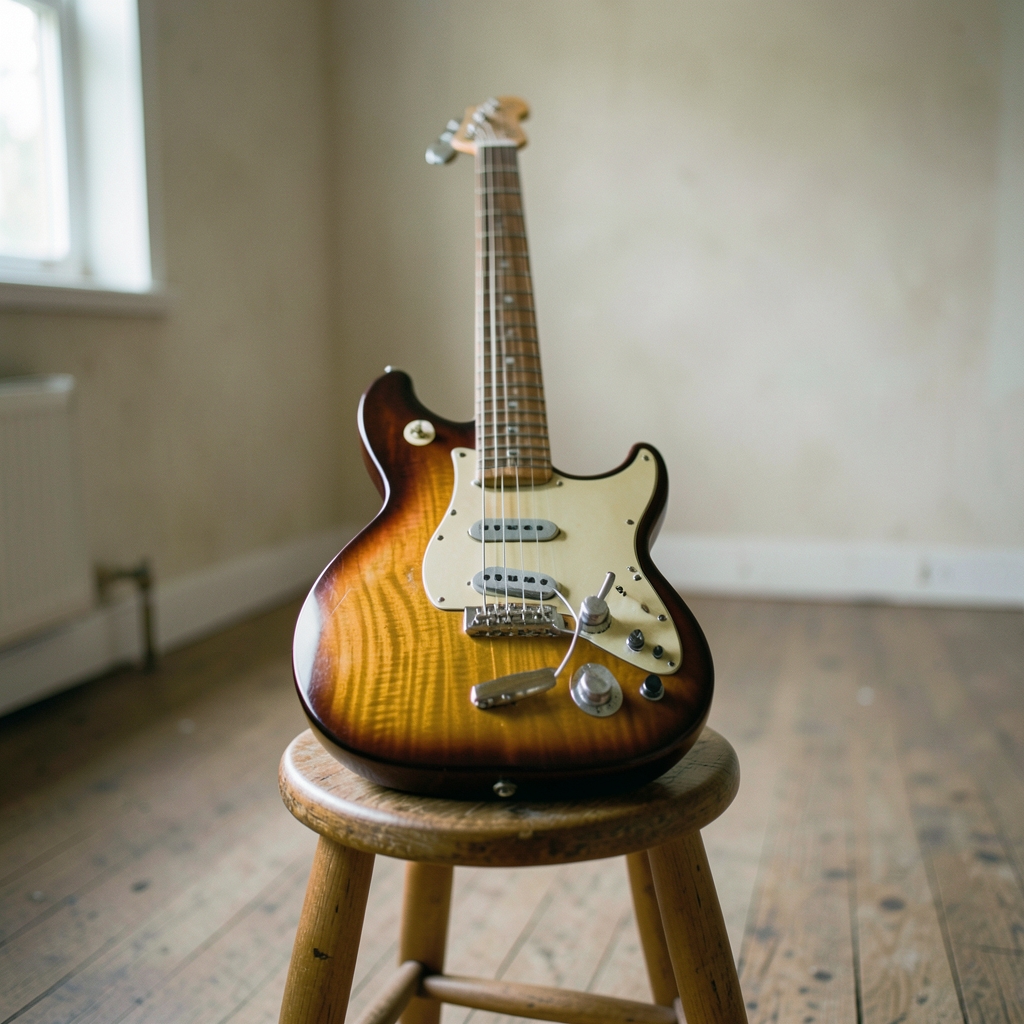
Fender Standard Stratocaster: Specs, Pros and Who It Suits
Fender Standard Stratocaster specs, strengths, conflicting body-wood claims and which version suits you, with Amazon listings and owner reviews compared.
Who Made Electric Guitar? Inventors and First Models
Who made electric guitar? George Beauchamp and Adolph Rickenbacker built the first commercial model in 1931, and Leo Fender's Telecaster followed in 1943.
How to Play the Electric Guitar: A Beginner's Plan
Learn how to play the electric guitar step by step: choose a playable guitar, set up your amp, learn clean notes and chords, and avoid the common beginner traps.